EMAIL US
Anna04@pandadiesel.com Liza03@pandadiesel.com

I watched a skilled mechanic struggle for days with a 2022 Ford F-250. His traditional testing methods couldn't diagnose the electronic injectors. The vehicle needed specialized equipment we didn't have at the time. This experience taught me how different modern systems really are.
Common rail systems differ fundamentally from traditional injection. They use constant high pressure in a shared fuel rail. Electronic controls manage injection timing with extreme precision. Multiple injection events per cycle enable cleaner combustion. Panda Diesel's test benches specifically address these technological differences with advanced electronic testing capabilities.
These differences aren't just theoretical—they create real diagnostic challenges that require specialized solutions.
Common rail technology represents a complete departure from mechanical injection principles. At Panda Diesel, we've studied these systems extensively to develop effective testing solutions.
The constant high pressure system maintains 1600-3000 bar in the fuel rail. This pressure remains available regardless of engine speed. Traditional systems generate pressure individually for each injection event.
Electronic control is the most significant difference. Solenoid or piezo-electric injectors receive signals from the engine computer. These signals control injection timing, duration, and multiple injection events.
Multiple injection capability enables sophisticated combustion strategies. Pilot injections reduce noise, main injections provide power, and post-injections control emissions. This complexity requires testing equipment that can analyze each event separately.
| System Aspect | Traditional Injection | Common Rail Injection |
| Pressure Generation | Individual pump elements | Constant rail pressure |
| Control Method | Mechanical governor | Electronic control unit |
| Injection Events | Single event per cycle | Multiple events per cycle |
| Testing Approach | Mechanical measurements | Electronic and hydraulic analysis |
| Diagnostic Methods | Pressure and flow tests | Electrical and performance analysis |
Pressure stability creates another distinction. Common rail systems maintain consistent pressure, while traditional systems experience pressure fluctuations with engine speed. This requires different testing approaches and equipment calibration.
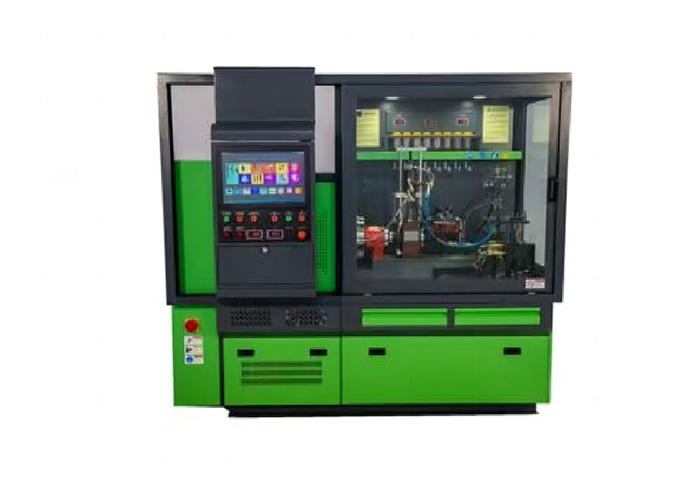
At Panda Diesel, our CRI test benches account for all these differences. They combine electronic testing with traditional hydraulic analysis. This comprehensive approach ensures accurate diagnosis of modern common rail injectors. By optimizing these critical components, we help ensure that every part of the common rail system operates with maximum fuel efficiency and minimal environmental impact.
A customer's workshop recently invested in a Panda Diesel CRI test bench. The first week, he correctly diagnosed seven injectors that had baffled other shops. The specific testing capabilities revealed problems he couldn't detect with generic equipment.
Panda Diesel's common rail test bench performs comprehensive injector testing. It measures electrical characteristics, injection quantity accuracy, leak-off rates, and response times. The equipment tests various injector types, including Bosch, Denso, and Piezo models. Our benches handle 4 or 6 injectors simultaneously, matching most common engine configurations.
These testing capabilities might sound technical, but each serves a critical diagnostic purpose in daily workshop operations.
A quality common rail test bench must evaluate multiple performance aspects simultaneously. At Panda Diesel, we've designed our equipment to test all critical injector functions.
Electrical testing verifies solenoid or piezo operation. The bench checks coil resistance, activation current, and response timing. Electrical faults are common in modern injectors and cause various driveability issues.
Injection quantity measurement ensures each injector delivers the correct fuel amount. The bench measures fuel delivery across different pressure and duration settings. Imbalanced delivery between cylinders causes rough running and power loss.
Leak-off testing identifies internal wear. The bench measures how much fuel bypasses the injector internally. Excessive leak-off indicates worn components that affect pressure stability.
| Test Type | Purpose | Importance Level |
| Electrical characteristic testing | Checks solenoid operation and piezo response | Critical for electronic fault diagnosis |
| Injection quantity measurement | Verifies fuel delivery accuracy | Essential for engine balance and performance |
| Leak-off rate analysis | Identifies internal wear and clearance issues | Prevents pressure loss in common rail |
| Response time measurement | Tests injector opening and closing speed | Ensures precise injection timing |
| Physical inspection | Checks nozzle wear and spray pattern | Maintains combustion efficiency |
Response time measurement is crucial for emission control. Slow injectors cannot achieve multiple injection strategies effectively. This leads to increased emissions and potential regulatory compliance issues.
Physical inspection capabilities include spray pattern analysis. The bench activates injectors against a viewing window. Technicians can assess fuel atomization quality and identify nozzle problems.
At Panda Diesel, our test benches handle various injector types including Bosch CRIN4, Denso IART, Piezo designs, Cummins HPI, and Volvo Smart injectors. This versatility makes our equipment suitable for workshops serving multiple vehicle brands.
 English
 français
 Español
 русский
 português
 العربية