EMAIL US
Anna04@pandadiesel.com Liza03@pandadiesel.com
In 2026, diesel service businesses and parts distributors face pressure to deliver consistent performance, faster lead times, and fewer warranty claims. More buyers are going direct-to-factory for critical fuel-system components like the injector nozzle — and pairing that sourcing strategy with reliable testing equipment from a proven nozzle tester manufacturer. This guide explains the strategic benefits of direct partnerships, what quality signals to validate, and how to build a sourcing workflow that scales.
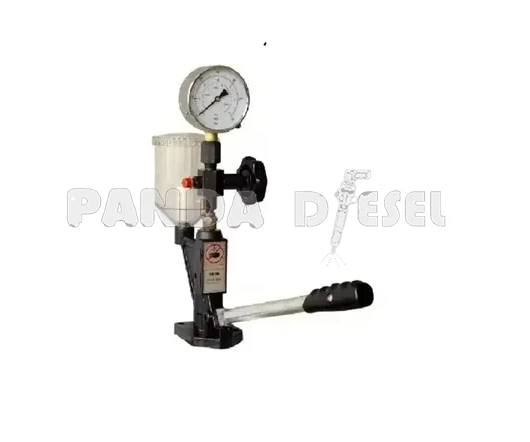
| Benefit | Multi-Layer Distribution | Direct-to-Factory |
|---|---|---|
| Specification alignment | Passed through intermediaries — details can be lost | Direct communication — specs confirmed at source |
| QC accountability | Distributed across multiple parties | Single point of contact; faster resolution |
| Pricing stability | Mark-up at each layer; volatile for small buyers | More stable; scalable with volume |
| Lead time | Added at each distribution step | Factory-direct schedule |
| Customization | Limited — standard catalog only | Possible on model, test range, or accessories |
For high-precision components and calibration-sensitive testing equipment, the quality of the original specification conversation determines the quality of what arrives on your bench. An injector nozzle sourced through three distribution layers with no direct factory QC visibility is a different risk profile from one sourced with direct access to production records, batch traceability, and a factory contact who answers technical questions.
| Component Factor | What It Affects | What to Confirm |
|---|---|---|
| Orifice geometry and diameter | Spray cone angle, penetration, and flow rate | Measured to drawing specification; confirmed by flow test |
| Needle-to-seat sealing | Leakage at cutoff; drip after injection | Seat angle accuracy and surface finish specification |
| Needle lift and spring load | Opening pressure consistency | Matches the target engine application specification |
| Surface hardness (heat treatment) | Wear resistance and service life | Material grade and heat treatment process documented |
| Dimensional tolerance | Assembly fit and operating clearance | Batch inspection records available per delivery lot |
A nozzle can pass an opening pressure test and still deliver a distorted spray pattern if orifice geometry is asymmetric or partially blocked from manufacturing residue. Distorted patterns cause localized combustion, increased smoke, and carbon deposit buildup that shortens the interval to the next failure.
Model and part number compatibility confirmed against the target engine application
Batch traceability — lot number linking each delivery to production and inspection records
Packaging cleanliness — precision nozzles must arrive in sealed, contamination-free packaging
No-mix assurance — confirm parts are packaged by model with clear identification marking
| Test Function | What It Confirms | Why It Matters |
|---|---|---|
| Opening pressure | The pressure at which the needle lifts | Confirms correct calibration for the engine application |
| Leak-back rate | Fuel returning past the needle at operating pressure | High leak-back means worn or damaged needle-to-seat contact |
| Spray pattern visualization | Cone angle, symmetry, and atomization quality | Visual confirmation that orifice geometry is correct |
| Chatter test | Needle response at low-pressure cycles | Confirms needle is free and not sticking |
| Repeatability across cycles | Consistency of pressure reading over multiple injections | Indicates whether the nozzle is consistent or degrading |
A nozzle tester with poor gauge calibration or an uncontrolled fluid temperature creates two problems: it misdiagnoses serviceable nozzles as failed (unnecessary replacement cost), and it passes failed nozzles as serviceable (comebacks and warranty claims). The cost of either error exceeds the cost of a quality tester by a significant margin over a workshop's annual throughput.
Operating pressure range covers the injection systems you service
Gauge resolution sufficient for the opening pressure tolerances required
Safety interlocks prevent spray exposure to the operator during pattern tests
Calibration routine is documented and can be performed in-shop
Spare parts and consumables — test fluid, seals, adapters — available from the nozzle tester manufacturer
| Stage | Action | Purpose |
|---|---|---|
| Incoming inspection | Visual check on packaging integrity and part marking | Catch transit damage and mis-picks before parts enter inventory |
| Pre-installation test | Opening pressure and leak-back on tester | Confirm each nozzle meets specification before it goes into an engine |
| Installation and rebuild | Clean assembly environment; correct torque | Prevent contamination introduction and mechanical distortion |
| Post-rebuild verification | Full test cycle after rebuild is complete | Confirm the rebuild achieved the target specification |
| Documentation | Record test results by nozzle serial or batch lot | Creates a traceability record for warranty claims and failure analysis |
Treat nozzle handling like a clean-room operation — no bare-hand contact on precision surfaces
Use lint-free cloths and dedicated clean tools for nozzle assembly
Store opened nozzles in sealed containers with test fluid to prevent surface oxidation
Never mix used and new parts in the same parts tray
Keeping test records by injector and nozzle batch reveals patterns — a batch with consistently borderline opening pressures, or a nozzle model that repeatedly shows high leak-back at the same mileage interval — that inform both sourcing decisions and service interval recommendations.
| Phase | Action | Success Criteria |
|---|---|---|
| Sample order | Request a tester and sample nozzles; test against known-good reference | Tester readings match reference; nozzle batch meets spec |
| Pilot order | Order a small batch; test full lot on arrival | Batch consistency within tolerance; no packaging failures |
| Pre-shipment inspection | Require dimensional and functional check documentation before bulk ships | Factory QC records match your acceptance criteria |
| Scale order | Place volume order with agreed AQL and documentation standards | Ongoing performance monitored against pilot baseline |
| Support Area | What to Confirm Before Purchase |
|---|---|
| Spare parts | All wear parts — seals, gauges, adapters — available with confirmed lead time |
| Calibration guidance | Written calibration procedure included; calibration intervals defined |
| Technical manual | Complete operating and maintenance manual in your language |
| After-sales response | Named contact; response time commitment for technical queries |
| Warranty | Duration and coverage — what failure modes are included |
Lead time from order to delivery for both testers and nozzle batches
MOQ per model for nozzles — confirm it matches your consumption rate
Warranty policy on both equipment and components
Return and replacement process for defective items
Direct-to-factory sourcing is not just about price — it is about control. When you source injector nozzle components directly and qualify a trusted nozzle tester manufacturer, you create a tighter quality loop: better batch consistency, clearer accountability, and fewer warranty claims. In 2026, that operational reliability is a measurable competitive advantage for any diesel service business or parts distributor operating at volume.
Q1: Why is direct-to-factory sourcing better for injector nozzle purchases?
Direct sourcing aligns your specification with the factory QC process, eliminates intermediary communication gaps, and creates a single accountability point for quality issues. The result is typically lower defect rates, faster resolution when problems occur, and more stable pricing on repeat orders compared to sourcing through multiple distribution layers.
Q2: What should I test on an injector nozzle before installation?
Opening pressure to confirm the needle lifts at the specification pressure for the engine application, leak-back rate to confirm needle-to-seat sealing integrity, spray pattern to confirm correct cone angle and atomization, and chatter response to confirm the needle is free and consistent across multiple injection cycles.
Q3: What features matter most when choosing a nozzle tester manufacturer?
Gauge accuracy and calibration traceability, operating pressure range matched to the systems you service, spray pattern visualization capability, operator safety design (spray shield and interlocks), spare parts and consumables availability, and a clear written calibration and maintenance procedure. After-sales technical support response time is equally important for a piece of diagnostic equipment.
Q4: How does better testing reduce warranty claims?
Testing before installation catches defective or mismatched nozzles before they enter an engine. Testing after rebuild confirms the assembly achieved the target specification. Both steps prevent the primary cause of comebacks — a nozzle that was installed without verified performance. Documentation of test results also provides evidence if a warranty claim is disputed.
Q5: What information should I provide to get an accurate nozzle tester quotation?
The injector types and engine applications you service, the test functions you require (opening pressure, leak-back, spray pattern, chatter), your expected daily throughput, available workshop power supply (voltage and phase), bench space constraints, and whether calibration support or operator training is needed as part of the package.
 English
 français
 Español
 русский
 português
 العربية