EMAIL US
Anna04@pandadiesel.com Liza03@pandadiesel.com

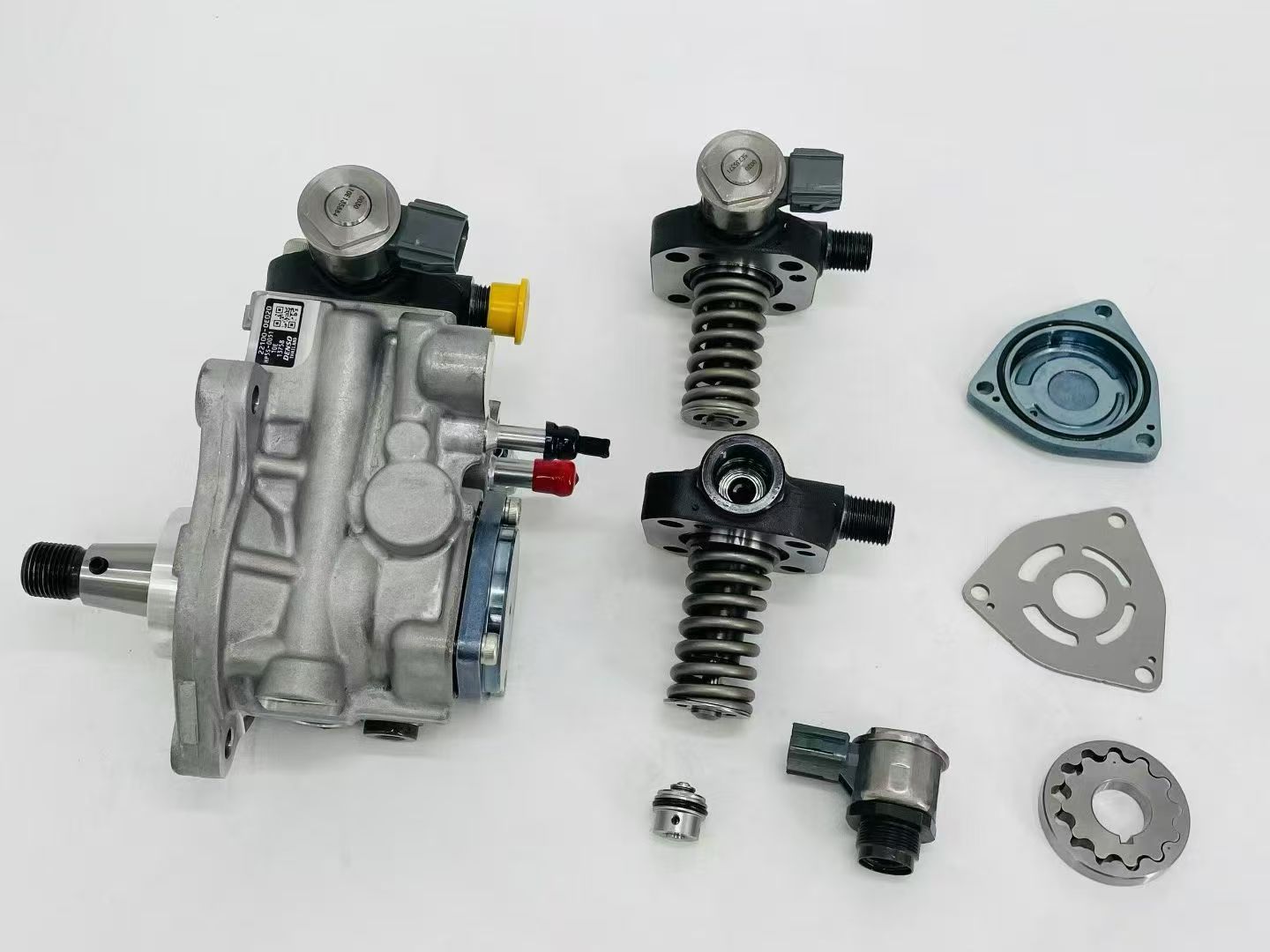
In 2026, fleet operators face rising fuel costs, relentless uptime pressure, and tighter emissions expectations — so small performance losses compound fast across dozens or hundreds of vehicles. Investing in high-precision pump diesel pump components improves injection stability, reduces premature failures, and cuts unplanned downtime. This guide explains the ROI logic and how disciplined diesel pump maintenance protects performance across the full vehicle lifecycle.
| Pressure Factor | Impact on Fuel System Requirements |
|---|---|
| Higher fleet utilization | Less tolerance for unplanned downtime — every hour offline has a cost |
| Stricter emissions expectations | Poor atomization and timing drift push vehicles out of compliance |
| Rising fuel prices | Injection inefficiency translates directly into higher fuel spend per kilometre |
| Repair labor cost increases | Fewer, better-quality repairs are more economical than frequent low-quality fixes |
A diesel injection pump operating at the edge of its wear tolerance does not fail dramatically — it degrades gradually. Fuel atomization quality drops, injection timing drifts, and delivery volumes become inconsistent between cylinders. The fleet operator sees higher fuel consumption, more smoke, harder cold starts, and eventually injector damage from poor spray patterns.
A single vehicle losing 3% fuel efficiency from a worn injection pump is manageable. A 50-vehicle fleet with the same issue burns significantly more fuel every month — and the repair cost compounds when wear accelerates downstream components like injectors and turbochargers.
| Component | Function | Precision Requirement |
|---|---|---|
| Plunger and barrel assembly | Creates and delivers high-pressure fuel | Clearance tolerances in the micron range — contamination causes rapid wear |
| Delivery valve | Controls pressure wave and prevents backflow | Seat geometry and spring rate affect timing and cut-off quality |
| Cam and roller assembly | Drives plunger stroke timing | Surface hardness and profile accuracy determine timing consistency |
| Seals and O-rings | Prevent external leakage and maintain pressure | Material compatibility with fuel type and operating temperature |
| Governor components | Controls fuel delivery across rpm range | Precision affects idle stability and full-load response |
The difference between a precision plunger and barrel set and a low-cost alternative is typically measured in microns — but the operational difference compounds significantly:
Low-quality components with wider tolerances allow higher internal leakage at operating pressure
Higher leakage means lower delivered pressure, worse atomization, and reduced injection precision
Accelerated wear creates metal debris that further damages the pump and downstream injectors
Confirm material grade — high-carbon or tool steel for plungers and barrels with documented heat treatment
Request surface finish specification — Ra value on critical mating surfaces
Confirm dimensional tolerance control and whether batch inspection records are available
Request compatibility confirmation for the specific pump model and fuel type in use
The most common cause of diesel pump failures is not component fatigue — it is contamination. Fuel systems operating with inadequate filtration or contaminated fuel supply experience accelerated wear at every precision surface in the pump.
| Contamination Type | Entry Point | Damage Mechanism |
|---|---|---|
| Particulate (dirt, rust) | Poor filtration; dirty tanks; contaminated transfer equipment | Abrasive wear on plunger and barrel; valve seat damage |
| Water | Condensation in tanks; contaminated fuel supply | Corrosion of precision surfaces; microbial growth in fuel |
| Wrong fuel grade or poor quality | Supply error; inadequate fuel testing | Incorrect lubricity; accelerated wear; injector deposits |
Fuel filter replacement on schedule — not extended beyond the manufacturer interval regardless of visual condition
Water separator servicing before water accumulation reaches the pump
Tank hygiene — regular inspection and draining of water traps in fleet tanks
Fuel quality verification when changing suppliers or operating in unfamiliar regions
Hard starting, especially in cold weather — pressure delivery is marginal
Power loss under load — injection volume or timing has drifted
Irregular or rough idle — delivery inconsistency between cylinders
Increased exhaust smoke — poor atomization or timing advance error
Unusual noise from the pump or fuel system — mechanical wear is progressing
| Part Quality | Expected Service Interval | Downtime Risk | Total Cost Over 3 Years |
|---|---|---|---|
| Low-cost generic | Shorter — higher leakage from day one | Higher — earlier failure, more frequent intervention | Often higher when labor and downtime are included |
| Precision OEM-equivalent | Full manufacturer interval | Lower — consistent performance to wear limit | Lower when full lifecycle is modeled |
Replace wear pairs as matched sets — a new plunger in a worn barrel does not restore original clearance
Avoid mixing quality levels within a pump — one low-tolerance component limits the performance of all precision components around it
Confirm calibration after any pump rebuild — a rebuilt pump that is not calibrated on a test bench will not deliver consistent timing and volume
Clean assembly environment: pump precision parts are sensitive to bench contamination during rebuild
Torque control: over-torqued fittings and components cause distortion that affects clearances
Post-rebuild calibration: test bench verification of delivery volume, timing, and pressure across the operating range before the pump returns to service
| Information | Why It Matters |
|---|---|
| Pump model and part number | Ensures correct dimensional and performance specification |
| Engine application and year | Confirms compatibility — same pump number may differ between applications |
| Duty cycle and operating environment | Identifies whether standard or heavy-duty specification is appropriate |
| Failure symptoms | Helps the supplier confirm whether the correct parts address the root cause |
Batch inspection records or COA confirming dimensional and material specification
Packaging cleanliness — precision pump parts must arrive in sealed, contamination-free packaging
Shelf life and storage instructions for rubber components and seals
Warranty terms — confirm coverage period and what failure modes are included
Stock fast-moving wear items — plunger and barrel sets, delivery valves, and seal kits for the most common pump models in the fleet
Standardize part numbers across the fleet where engine specifications allow — reduces inventory complexity and ensures correct parts are available quickly
Track failure patterns by pump model and operating route — recurring failures on specific routes indicate a fuel quality or operating condition issue, not just a parts quality issue
Fleet efficiency gains are built in the fuel system. High-precision pump diesel pump parts reduce failures, stabilize injection performance, and extend service intervals — but only when paired with disciplined diesel pump maintenance that controls contamination and catches early wear before it cascades through the fuel system. The combination of quality parts and consistent maintenance is what protects uptime and operating margin in a high-utilization fleet.
Q1: How do precision pump diesel pump parts improve fleet ROI?
Precision parts maintain tighter internal clearances, which preserves injection pressure, timing consistency, and atomization quality across the service interval. This directly reduces fuel consumption, prevents downstream injector damage from poor spray patterns, and extends the time between major repairs — all of which compound into measurable cost savings at fleet scale.
Q2: What are the most common causes of diesel fuel pump failure?
Contamination — particularly particulate matter and water in the fuel supply — is the leading cause, followed by inadequate filtration maintenance, poor fuel quality, incorrect installation procedures, and normal wear accelerated by harsh operating conditions or extended service intervals.
Q3: What diesel pump maintenance steps have the highest impact?
Consistent fuel filter replacement on schedule, water separator servicing before water accumulates, tank hygiene inspection, and immediate investigation of early warning symptoms — hard starts, power loss, rough idle, or increased smoke. Each of these addresses a different contamination or wear pathway before it becomes a failure event.
Q4: Should fleets rebuild diesel pumps or replace them outright?
Rebuilding with matched precision parts is economical when done correctly — clean environment, correct torque, calibrated on a test bench after assembly. Replacement is more appropriate when pump body wear is beyond serviceable limits or when rebuild labor exceeds the cost advantage. The decision should be based on a condition assessment, not a default preference.
Q5: What information is needed to order the correct diesel pump parts?
Pump model number and part number (from the pump nameplate), engine application and year, operating environment description, current failure symptoms or the specific components you are replacing, and whether the application is standard or heavy-duty duty cycle. A photo of the pump nameplate resolves most ambiguity quickly.
 English
 français
 Español
 русский
 português
 العربية