EMAIL US
Anna04@pandadiesel.com Liza03@pandadiesel.com
In 2026, fleets and equipment owners are running tighter uptime schedules, higher injection pressures, and longer service intervals than the systems were originally designed around. When pumping diesel fuel starts to lose delivery pressure, the symptoms escalate quickly and compound on each other: hard starting after the equipment sits overnight, hesitation and flat acceleration under load, surging at steady RPM, and smoke from unstable injection quantity. What starts as a minor driveability complaint becomes a no-start event, a tow, and a lost production day.
The frustrating part is that most low-pressure complaints trace back to predictable, well-understood wear points inside the pump. The pressure is not disappearing into the system — it is leaking internally through components that have worn beyond their serviceable clearance. A disciplined diesel pump maintenance approach combined with targeted replacement of the right core parts can restore delivery pressure and performance in most cases without replacing the entire pump assembly.
This article identifies where pressure is lost, which parts are responsible, and how to select and install the correct replacement components to restore consistent fuel delivery.
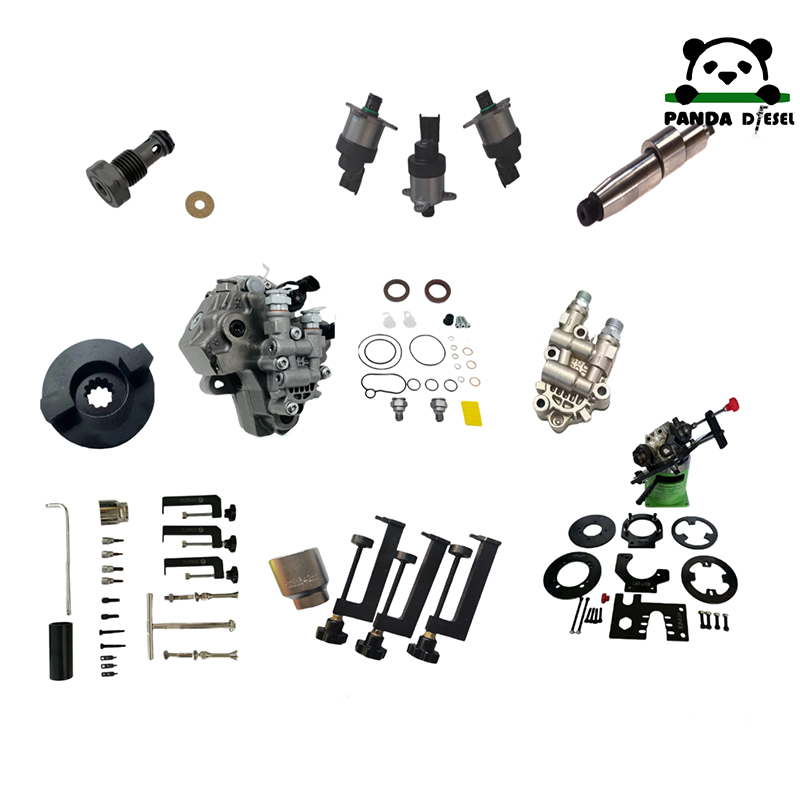
Understanding what the pump is supposed to do makes it easier to diagnose what it is failing to do.
The high-pressure pump's job is to take low-pressure fuel from the transfer or lift pump and compress it to the rail or injection pressure required by the system — consistently, across cranking speed, idle, and full load. That means building pressure quickly during cranking so the engine starts, maintaining stable pressure at idle so combustion is consistent, and sustaining pressure under load so injection quantity and timing remain accurate when the engine is working hard.
Diesel fuel delivery pressure fails in two distinct ways, and distinguishing between them is the first diagnostic step.
The first failure mode is slow pressure build. The pump cannot reach target pressure quickly enough during cranking, or pressure lags behind demand when load increases suddenly. This produces extended crank times, hesitation on acceleration, and flat power delivery. The cause is almost always internal slip — fuel recirculating inside the pump rather than being delivered forward, because the sealing clearance between moving parts has grown beyond specification.
The second failure mode is rapid pressure bleed-down. The pump builds pressure adequately but cannot hold it — pressure drops quickly when the pump stops or between injection events. This produces poor residual pressure, which affects restart behavior and injection consistency at low speed. The cause is a one-way sealing failure somewhere in the pressure path, most commonly the delivery valve.
Both failure modes produce diesel pumping issues that feel similar to the driver — the engine is hard to start and lacks power — but they require different parts to fix. Measuring pressure behavior under cranking and at idle, and observing how quickly pressure drops when the engine stops, separates the two failure modes before any parts are ordered.
The plunger and barrel are the pressure-generating components of the high-pressure pump. The plunger reciprocates inside the barrel, and the clearance between them — measured in microns — determines how much fuel slips past the plunger on each compression stroke rather than being delivered forward.
New plunger and barrel assemblies are manufactured to extremely tight clearances. As the pump accumulates hours, that clearance grows through abrasive wear from fuel-borne contamination, corrosive wear from water contamination, and adhesive wear from inadequate fuel lubricity. When the clearance exceeds the serviceable limit, the pump can no longer build pressure quickly enough to meet system demand.
Fuel pump plunger wear is the primary cause of slow pressure build. It is worsened by extended filter service intervals, contaminated fuel, biodiesel blends with poor lubricity, and water ingress from condensation or poor tank hygiene. In high-mileage or high-hour equipment, plunger wear is often the first internal failure mode to appear.
The delivery valve sits at the outlet of the pump's high-pressure chamber and functions as a one-way check valve. It opens under pressure to allow fuel to flow forward to the rail or injector, and closes when pressure equalizes to prevent backflow. The delivery valve also controls residual line pressure — the pressure that remains in the high-pressure circuit between injection events and after the engine stops.
When the delivery valve seat wears or the valve element fails to seat cleanly, fuel bleeds back through the valve between injection events. The result is reduced residual pressure, which affects injection consistency at low speed and idle, and slow pressure recovery after the engine restarts from a hot or warm condition.
Delivery valve sealing failure is the primary cause of rapid pressure bleed-down. It often appears alongside plunger wear in high-hour pumps, because the same contamination that wears the plunger also damages the valve seat.
| Cause | Symptom | Check |
|---|---|---|
| Air ingress on suction side | Surging, intermittent pressure loss | Inspect fittings, lines, and filter housing for leaks |
| Restricted filter or collapsed strainer | Pressure low across all conditions | Measure pressure drop across filter; replace on schedule |
| Weak transfer or lift pump | High-pressure pump starved of supply | Measure lift pump output pressure and flow |
| Sticking pressure regulator or relief valve | Pressure unstable or capped below target | Test regulator response; inspect for contamination |
| Excessive injector return or leak-off | System appears low-pressure even with healthy pump | Measure injector return flow; compare against specification |
Confirming that supply-side and system-side causes have been ruled out before opening the high-pressure pump prevents the most common diagnostic error: replacing internal pump parts when the actual cause is a collapsed pickup strainer or a leaking suction fitting.
Once the failure mode is confirmed — slow pressure build, rapid bleed-down, or both — targeted parts replacement addresses the specific mechanism rather than replacing components that are still serviceable.
| Part | Function | Failure Mode Addressed |
|---|---|---|
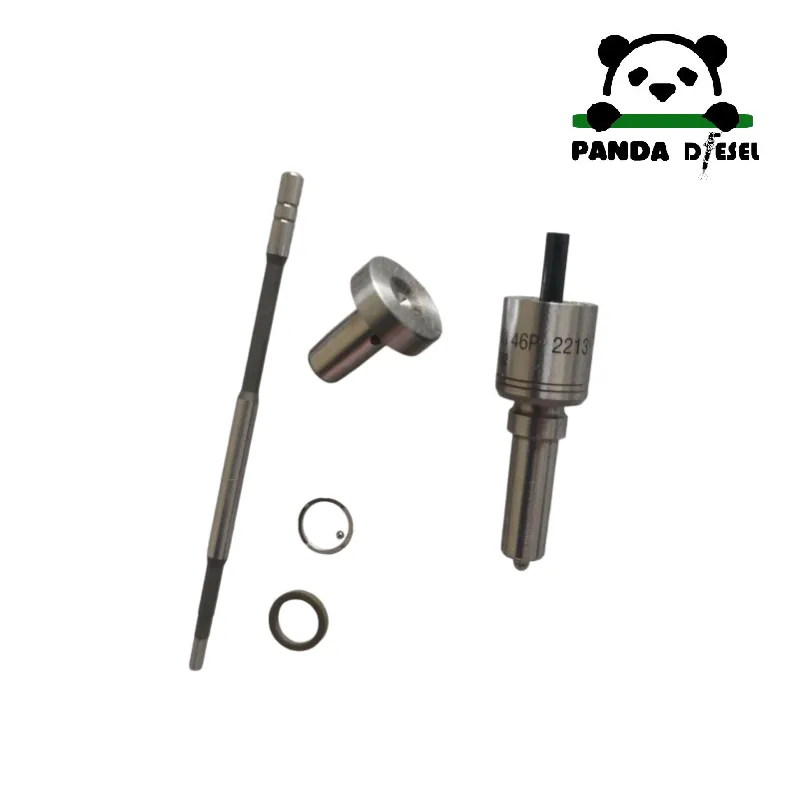
| Plunger and barrel assembly | Generates compression pressure; clearance controls internal slip | Slow pressure build; pressure lag under load |
| Delivery valve and seat | One-way sealing; controls residual pressure | Rapid pressure bleed-down; poor restart behavior |
| Seals and O-rings | Prevents internal and external leakage paths | Both failure modes; also prevents external fuel leaks |
| Springs and retainers | Maintains consistent valve closing force | Delivery valve sealing consistency |
| Check valves | Supports one-way flow in transfer and control circuits | Pressure instability; surging |
Pump model and code: high-pressure pump parts are manufactured to tight dimensional tolerances specific to each pump family. A plunger that fits a Bosch CP1 pump is not interchangeable with one for a CP3 or CP4, even if the external dimensions appear similar. Confirm the pump model code from the pump housing or the vehicle/equipment service documentation before ordering.
Material and surface finish: plungers and delivery valves for high-pressure diesel service are manufactured from hardened steel with precision-ground surfaces. Replacement parts should match the original material specification — softer or lower-hardness alternatives wear faster and may not achieve the required sealing clearance.
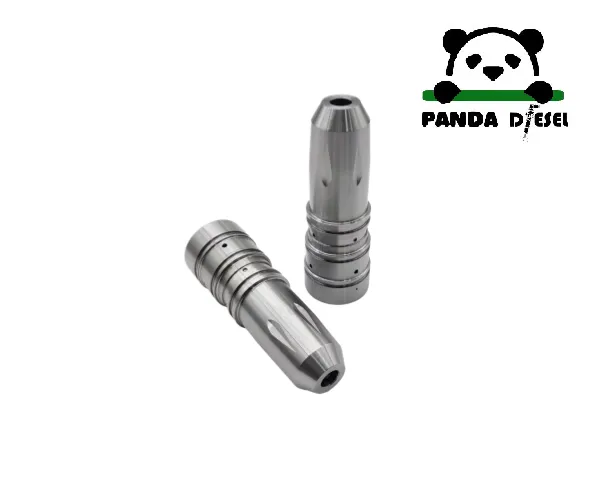
Brand family compatibility: Bosch, Denso, Delphi, and Cummins pump families use different internal geometries, valve designs, and assembly sequences. Brand-specific parts from Panda Diesel's diesel pump parts range are matched to the correct pump family to ensure dimensional compatibility and correct sealing behavior.
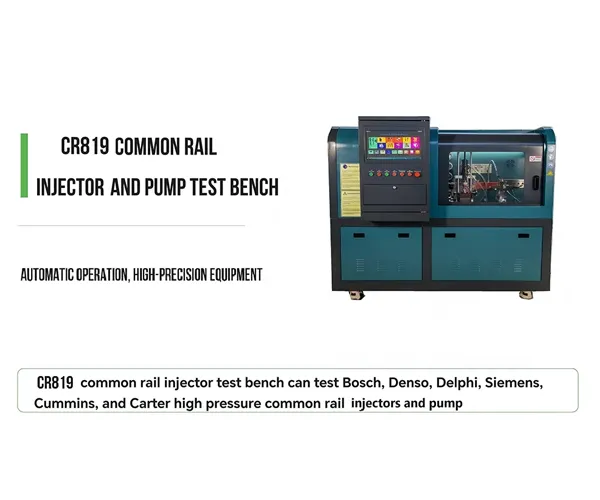
Calibration requirement: replacing the plunger and barrel or delivery valve in a high-pressure pump typically requires bench calibration after reassembly to verify that delivery quantity and timing are within specification. Plan for bench verification as part of the repair scope — a mechanically correct assembly that has not been calibrated may still produce inconsistent injection quantity.
Identify the pump and injector system type first. The pump model code is the most important piece of information for correct parts selection. It is stamped on the pump housing or available from the vehicle/equipment service record. Without the correct model code, parts selection relies on application cross-references that may not account for mid-production specification changes.
Confirm the failure mode before selecting the parts scope. A slow-build failure requires plunger and barrel replacement. A bleed-down failure requires delivery valve replacement. Both failure modes together — common in high-hour pumps — require both parts plus a full seal kit. Ordering only one set of parts when both failure modes are present produces a partial repair that returns for the second failure within weeks.
Select the matching parts kit scope based on the confirmed failure mode and pump condition. For a pump with confirmed plunger wear and no delivery valve symptoms, a plunger set and seal kit is the correct scope. For a pump with both failure modes and visible contamination damage, a complete overhaul kit covering plunger, delivery valve, seals, springs, and check valves is the appropriate scope.
Plan for calibration as part of the repair. Bench calibration after internal parts replacement is not optional for consistent results — it is the step that confirms the mechanical repair has produced the correct delivery quantity and timing. A repair that skips calibration may pass a static pressure test but fail under dynamic load conditions.
Cleanliness is the most critical installation requirement for high-pressure pump parts. Plunger and barrel assemblies and delivery valves are precision components with clearances measured in microns. A single particle of contamination introduced during assembly can score the new parts immediately and reproduce the original failure within hours of operation.
Work in a clean area with clean tools. Wash new parts in clean diesel fuel before installation. Replace the fuel filter and flush any contamination from the supply lines before returning the pump to service — new parts installed into a contaminated fuel system will wear at the same rate as the parts they replaced.
Follow the torque and assembly sequence specified for the pump family. Incorrect torque on delivery valve retainers or plunger barrel seats can distort the sealing geometry and produce the same pressure loss symptoms as worn parts.
Filtration discipline is the single most effective maintenance practice for extending plunger and delivery valve life. The correct filter micron rating for the injection system, changed at the correct interval, removes the abrasive particles that drive plunger wear before they reach the pump. Running extended filter intervals to reduce maintenance cost is a false economy — the accelerated plunger wear that results costs more in parts and downtime than the filter savings.
Water separation and tank hygiene prevent the corrosive wear mode that damages plunger surfaces and delivery valve seats. Water in diesel fuel — from condensation, contaminated supply, or poor tank sealing — creates corrosive conditions inside the pump that accelerate wear and can produce pitting damage that no parts replacement can fully correct without addressing the contamination source.
Scheduled pressure checks catch delivery pressure drift before it produces hard-start events. A pressure measurement at cranking and idle, recorded at each service interval, creates a trend line that shows when pressure is declining toward the failure threshold. Replacing plunger and barrel assemblies at the first sign of pressure drift — before the pump fails to start the engine — is less expensive than an emergency repair after a no-start event in the field.
| Cost Item | Without Maintenance Discipline | With Maintenance Discipline |
|---|---|---|
| Filter replacement cost | Low — extended intervals | Moderate — correct intervals |
| Plunger and barrel replacement frequency | High — accelerated wear from contamination | Low — protected by filtration |
| Delivery valve replacement frequency | High — contamination-driven seat damage | Low — clean fuel extends valve life |
| Unplanned downtime events per year | High — no-start events, tows, emergency repairs | Low — pressure drift caught at service |
| Repeat repair rate | High — contamination source not addressed | Low — root cause corrected |
| Total annual maintenance cost | Higher — reactive repairs plus downtime | Lower — planned parts plus avoided downtime |
For a fleet running 20 vehicles with one unplanned no-start event per vehicle per year at a conservative downtime cost of $500 per event, the avoided downtime value alone is $10,000 per year — against a filtration and scheduled pressure check program that costs a fraction of that figure.
Low delivery pressure is not a minor inconvenience — it is a compounding reliability problem that progresses from rough idle to hard starting to no-start if the underlying wear is not addressed. In most cases, restoring diesel fuel delivery pressure comes down to identifying whether the failure mode is slow pressure build (plunger and barrel wear) or rapid pressure bleed-down (delivery valve sealing failure), replacing the correct high-pressure pump parts for the confirmed failure mode, and then locking in a filtration and inspection routine that prevents the contamination conditions that caused the wear in the first place.
Targeted parts replacement with correctly specified components is faster, less expensive, and more reliable than guesswork replacement or whole-pump substitution when the failure is localized and the pump housing is serviceable.
Visit the diesel pump parts product page to review the available range, then submit the following details to receive a matched parts recommendation and pricing:
| Parameter | What to Provide |
|---|---|
| Work condition | Vehicle or equipment type, duty cycle (fleet, off-highway, agricultural), environment (dust, water exposure) |
| Quantity | Number of pumps or units to repair per month |
| Size and spec | Pump brand and model code, engine model, injector system type |
| Target metrics | Target delivery pressure range, start time goal, acceleration and driveability goal |
| Current problem | Symptoms, pressure readings if available, recent filter or fuel changes, contamination evidence, repeat failure history |
1. What does pumping diesel fuel mean in a modern diesel system?
pumping diesel fuel refers to the process of delivering diesel at the pressure and flow rate required to support correct injection quantity and timing across all operating conditions — from cold cranking through full load. In a common rail system, the high-pressure pump compresses fuel to rail pressure (typically 160 to 250 MPa in current-generation engines) and maintains that pressure consistently so the injectors can deliver the commanded fuel quantity on each injection event. When the pump cannot maintain the required pressure, injection quantity becomes inconsistent and engine performance degrades across all operating conditions.
2. Is it better to replace internal parts or replace the whole pump?
Parts replacement is the more cost-effective approach when the failure is localized — confirmed plunger wear or delivery valve sealing failure — and the pump housing, cam ring, and major structural components are serviceable. Whole-pump replacement is the better choice when there is widespread scoring or corrosion damage across multiple internal surfaces, when the pump has suffered a catastrophic contamination event that has damaged components beyond individual replacement, or when the pump has been repaired multiple times and the housing dimensions are no longer within specification. A diagnostic inspection of the pump internals before ordering parts confirms which approach is appropriate.
3. How do diesel pump parts pay for themselves?
The return on targeted parts replacement comes from three sources. Avoided downtime is the largest — a no-start event in a fleet or off-highway application carries towing cost, lost production time, and emergency labor rates that typically exceed the cost of a planned parts replacement by a factor of three to five. Reduced fuel waste from unstable injection — a pump delivering inconsistent quantity burns more fuel per unit of work — adds ongoing savings after the repair. Lower repeat repair rate, when the correct failure mode is addressed and the contamination source is corrected, prevents the same repair from recurring within the next service interval.
4. Do we need to modify the fuel system to fix low delivery pressure?
The pump repair itself typically requires no system modification. However, if the root cause of the plunger or delivery valve wear is contaminated fuel — from a dirty tank, failed water separator, or incorrect filter specification — installing new parts without correcting the contamination source will reproduce the failure at the same rate as the original wear. System-side corrections that should accompany an internal pump repair include tank cleaning or inspection, replacement of the fuel filter with the correct specification, inspection and replacement of any cracked or leaking suction lines, and verification that the lift pump is delivering adequate supply pressure and flow to the high-pressure pump inlet.
5. What parameters should I provide for correct parts selection?
Provide the pump model code (from the pump housing or service documentation), the engine model and year, the injector system type (common rail, unit injector, or distributor pump), the observed symptoms and any pressure measurements taken at cranking and idle, the fuel filter type and most recent service interval, any evidence of contamination (water in the filter bowl, metal particles in the fuel, discoloration), and the history of previous repairs on the same pump. The pump model code is the most critical piece of information — without it, parts selection relies on application cross-references that may not account for specification changes within the same engine model range.
NEXT
 English
 français
 Español
 русский
 português
 العربية